
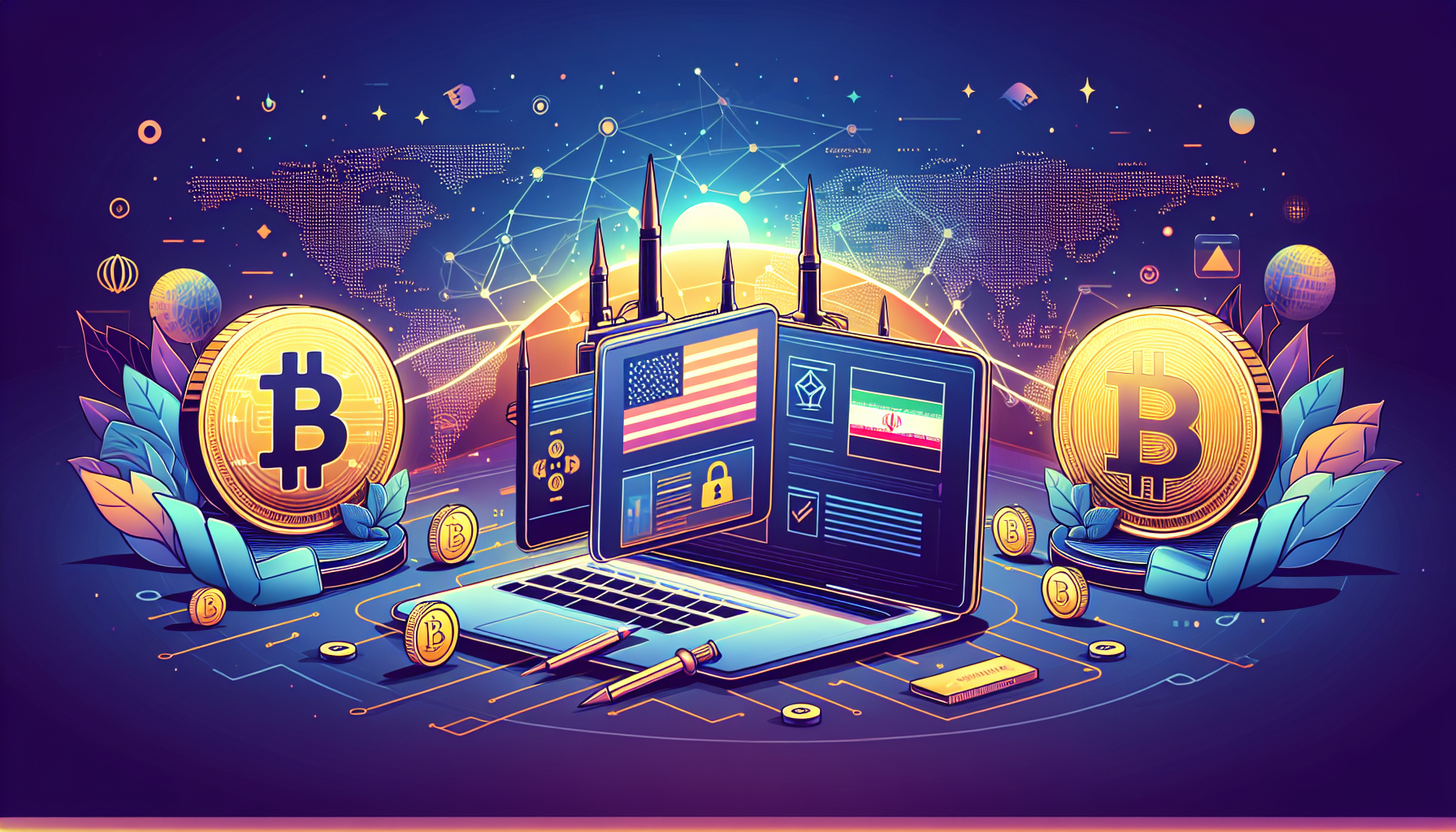
# How the US-Iran Conflict Could Propel Bitcoin to New Heights
**SUMMARY:** Arthur Hayes, co-founder of BitMEX, argues that the U.S. military escalation in Iran could lead to Federal Reserve easings, influencing Bitcoin’s price positively. Drawing parallels with historical conflicts, Hayes suggests that geopolitical tensions often result in monetary easing, which could create a favorable environment for Bitcoin investors.
## The Context: U.S. Military Engagement in the Middle East
The United States has a long and complex history of military involvement in the Middle East, characterized by a series of interventions aimed at stabilizing the region, responding to threats, or securing national interests. From the oil crises of the 1970s to the Gulf Wars and more recent conflicts, U.S. military actions have consistently shaped global financial dynamics.
These interventions, often accompanied by significant financial costs, have historically prompted the Federal Reserve to adopt more accommodative monetary policies. This trend raises critical questions: What are the implications for financial markets, particularly cryptocurrency, during periods of geopolitical turmoil?
## Hayes’ Analysis: A Historical Perspective
In a thought-provoking essay released on March 1, Arthur Hayes analyzed the ongoing tensions between the U.S. and Iran, suggesting that the current military escalation mirrors past conflicts that have led to Federal Reserve rate cuts. He references several key historical moments:
– **The Gulf War of 1990:** Following Iraq’s invasion of Kuwait, the Federal Open Market Committee (FOMC) noted in its August minutes that “events in the Middle East had greatly complicated the formulation of an effective monetary policy.” This complexity ultimately resulted in rate cuts later that year to stimulate economic growth.
– **Post-9/11 Response:** In the wake of the September 11 attacks, then-Fed Chair Alan Greenspan convened an emergency meeting to address the heightened uncertainty in financial markets. The immediate response was a 50 basis point cut in interest rates, underscoring how geopolitical events can prompt rapid monetary policy adjustments.
These historical examples underline Hayes’ assertion that the U.S. response to military engagements often involves easing monetary policy to support the economy during uncertain times.
## Bitcoin’s Role: A Safe Haven or Speculative Asset?
As tensions escalated in February 2023, the cryptocurrency market reacted swiftly. Bitcoin, the leading cryptocurrency, initially dropped from approximately $66,000 to around $63,600 following reports of military strikes in Iran. However, it rebounded to $67,000 later the same evening after confirmation of significant political developments, including the death of Iranian Supreme Leader Ayatollah Ali Khamenei.
This volatile reaction highlights Bitcoin’s unique position in the financial landscape — a digital asset that operates 24/7, potentially serving as a safe haven during times of geopolitical instability. Many investors turn to Bitcoin not only as a speculative investment but also as a hedge against traditional financial systems that may be impacted by such crises.
## The Current Market Climate: Assessing Bitcoin’s Performance
Despite the recent spikes associated with geopolitical news, Bitcoin remains down significantly over the past month, with a decline of more than 20%. This downturn marks a challenging phase for the cryptocurrency, which has faced five consecutive months of losses — a streak not seen since 2018.
Investors and analysts alike are now contemplating whether these price movements are indicative of broader market trends or simply reactions to transient geopolitical events. The cryptocurrency market has been known for its volatility, and the current climate appears no different.
## Hayes’ Recommendations: A Strategic Approach to Investing
In light of the unfolding events, Hayes offers a strategic perspective for prospective investors. He emphasizes the importance of understanding the link between military engagement and monetary policy. His key points include:
– **Patience is Key:** Hayes argues that investors should adopt a wait-and-see approach, resisting the urge to react impulsively to immediate market fluctuations.
– **Timing is Everything:** He suggests that the most opportune moment to invest in Bitcoin — or high-quality altcoins — is not during the height of conflict but rather after the Federal Reserve has made a definitive move to cut rates or resume money printing.
– **Long-Term Outlook:** Hayes posits that the financial ramifications of U.S. military actions often lead to a favorable environment for Bitcoin as monetary easing tends to support asset prices.
## Broader Implications: The Intersection of Geopolitics and Cryptocurrency
The interplay between geopolitical events and cryptocurrency markets raises broader questions about the future of digital assets. As countries grapple with the implications of military conflicts and economic sanctions, cryptocurrencies are increasingly viewed as alternative financial instruments.
### Potential Growth of Bitcoin as a Global Asset
– **Decentralized Nature:** Bitcoin operates independently of traditional financial institutions, providing a decentralized alternative that can appeal to those seeking refuge from geopolitical instability.
– **Increased Adoption:** As more individuals and institutions recognize Bitcoin’s potential as a hedge against inflation and economic uncertainty, demand may surge, contributing to price increases.
– **Regulatory Scrutiny:** However, with increasing adoption comes the likelihood of heightened regulatory scrutiny. Governments may seek to exert control over cryptocurrencies to mitigate risks associated with financial instability during conflicts.
### The Role of Central Bank Digital Currencies (CBDCs)
As Bitcoin garners attention, central banks worldwide are exploring the introduction of digital currencies. These Central Bank Digital Currencies (CBDCs) could reshape the financial landscape, potentially competing with cryptocurrencies like Bitcoin.
– **Monetary Control:** CBDCs would allow governments to maintain tighter control over monetary policy, making it essential for Bitcoin investors to remain vigilant about regulatory developments.
– **Hybrid Financial Systems:** The advent of CBDCs may lead to a hybrid financial ecosystem where traditional and digital currencies coexist, influencing how investors approach Bitcoin and other cryptocurrencies.
## Conclusion: Navigating the Future of Bitcoin Amidst Geopolitical Tensions
The ongoing U.S.-Iran conflict serves as a reminder of the intricate relationship between geopolitical events and financial markets. As Arthur Hayes outlines, the historical precedent suggests that military engagements often lead to monetary easing, which can impact the price of cryptocurrencies like Bitcoin.
Investors are encouraged to adopt a strategic approach, weighing the potential long-term benefits of Bitcoin against the immediate volatility driven by external events. As the world watches the developments in the Middle East, the cryptocurrency market remains a dynamic arena, poised for both challenges and opportunities.
In this evolving landscape, understanding the implications of U.S. foreign policy, market responses, and regulatory shifts will be crucial for navigating the future of Bitcoin and the broader cryptocurrency ecosystem. Whether Bitcoin emerges as a robust safe haven or a speculative asset will largely depend on how these factors interplay in the coming months and years.
As always, informed and cautious investment decisions will be paramount in this fast-paced environment.
Source: https://cryptopotato.com/arthur-hayes-explains-how-us-iran-conflict-could-boost-bitcoin/



Leave a Reply