
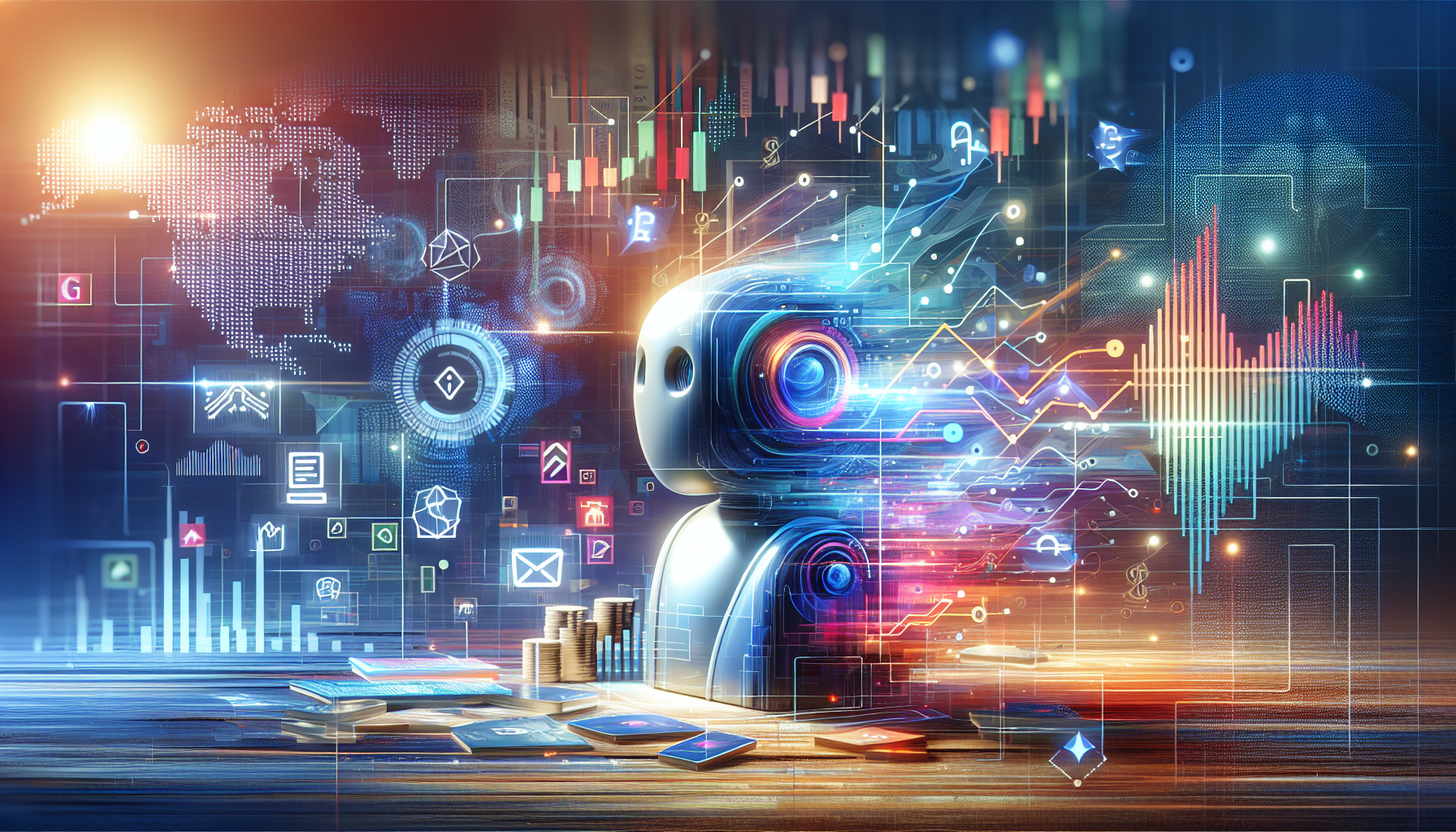
Intuit Inc., a company synonymous with tax preparation and financial management software, has found itself in a precarious position in early 2023. Despite being a forerunner in the integration of artificial intelligence (AI) within its business model, Intuit’s stock has taken a significant hit, marking it as one of the worst performers in the S&P 500 this year. As the SaaSpocalypse — a term reflecting widespread fear among investors that AI will render traditional software companies obsolete — swept through the market, Intuit’s early innovations in AI appeared to provide little refuge from investor panic.
### The Rise of Intuit: From Software to AI Pioneer
Founded in 1983, Intuit has a storied history as a leader in financial software solutions. Its flagship products, TurboTax and QuickBooks, have revolutionized how individuals and small businesses manage their finances. Over the years, Intuit has consistently outperformed the S&P Index, establishing itself as a cornerstone of Wall Street.
In recent years, however, the company has pivoted towards AI, positioning itself at the cutting edge of technological advancement. CEO Sasan Goodarzi, who took the helm in 2019, recognized early on the transformative potential of AI. In a 2020 interview with Fortune, he stated that “in five to ten years, undisputed, it will be as powerful as the impact of electricity and the internet.” Goodarzi didn’t just speak about innovation; he enacted drastic changes, laying off 715 employees and hiring approximately 700 new staff focused on AI integration.
This ambitious strategy aimed to create a business model that combined the power of AI with the irreplaceable value of human interaction. Intuit’s approach was seen as a blueprint for how to navigate the evolving landscape of technology-driven financial services.
### The SaaSpocalypse: A Market Reaction to AI Anxiety
As tax season arrived in January and February of 2023, the market’s reaction to AI technologies took a sharp turn. Despite the timing being ripe for Intuit, given the seasonal surge in demand for tax preparation software, the company’s stock plummeted. The phenomenon dubbed the “SaaSpocalypse” signified a collective unease among investors regarding the future of software companies in an increasingly AI-dominated landscape.
Goodarzi noted the irony of the situation: “We got sold even more [than others] in the first six weeks of the year because we were trading so much better than our peer companies.” As the stock market descended into chaos, companies that had previously excelled found themselves in a precarious position. Intuit’s stock price, previously buoyed by its strong performance, took a nosedive, raising questions about the future of software firms.
### The Market’s Fear: AI and the Future of Software
The core of the market’s anxiety lies in the fear that major AI players, such as OpenAI, Google’s Gemini, and Anthropic, will overshadow smaller software companies. Investors worry that these technology giants, with their vast resources and advanced algorithms, will dominate the customer relationship landscape, leaving companies like Intuit struggling to compete.
Despite Intuit’s efforts to innovate, many investors remain skeptical. The stock rebounded partially to around $350 as of the time of publication, valuing the company at just under $100 billion. This valuation is a stark contrast to the nearly $220 billion peak reached in the previous summer. The market’s apprehension raises critical questions: Can established software companies coexist with AI giants, or will they inevitably be pushed to the periphery?
### Balancing AI with Human Interaction
Goodarzi’s vision and strategy for Intuit revolve around a critical insight: “People don’t want to do anything that has to do with their money. They want us to do it for them.” This understanding has driven Intuit to enhance its software offerings not just through technology but through providing human support as well.
Intuit’s model acknowledges that while AI can optimize processes, the trust and confidence of customers often hinge on the human element. The company has integrated live U.S.-based professionals into its service offerings, allowing customers to access expertise in real-time via chat or video. This hybrid approach aims to alleviate customer anxiety, ensuring that individuals feel supported in their financial decisions.
### Strategic Acquisitions: Expanding Intuit’s Ecosystem
To further solidify its position in the market, Intuit has pursued strategic acquisitions aimed at enhancing its capabilities. Two notable purchases were Credit Karma and Mailchimp, which cost the company $8 billion and $12 billion, respectively. These acquisitions aimed to combine consumer credit data with tax information and empower QuickBooks users with marketing tools.
While such significant investments often raise red flags among analysts, Intuit has demonstrated an ability to effectively integrate these acquisitions into its operational framework. Corporate finance experts have praised Goodarzi’s leadership in navigating these changes and transforming Intuit into a more robust player in the AI landscape.
### The Road Ahead: Challenges and Opportunities
Looking forward, Goodarzi faces the daunting task of steering Intuit through a tumultuous market while emphasizing the combined strength of AI and human interaction. He acknowledges the pivotal question: “Who will own the customer interaction layer?” The reality is that major AI firms are well-positioned to dominate this space, and Intuit must fight to maintain its foothold.
Intuit has forged partnerships with AI leaders like OpenAI and Anthropic to leverage their technologies while retaining control over customer relationships. Goodarzi asserts, “It’s in the contract, we own the customer experience and the customer relationship.” This strategic positioning aims to ensure that Intuit remains relevant in a rapidly evolving landscape.
### Market Sentiment: Analysts’ Views on Intuit
Despite the current market turmoil and investor skepticism, analysts remain optimistic about Intuit’s long-term potential. Financial metrics continue to support a strong outlook, with many Wall Street experts rating the stock as a “buy” or “strong buy.” Intuit’s dual focus on AI and human interaction positions it uniquely to tackle the challenges posed by market disruptions.
The coming years will be critical in determining whether Intuit’s innovative strategies can weather the storm of the SaaSpocalypse. As the tech landscape continues to evolve, the company’s ability to adapt and thrive will be closely scrutinized by investors and industry observers alike.
### Conclusion: The Legacy of Sasan Goodarzi
The journey of Intuit under Sasan Goodarzi’s leadership exemplifies the challenges and opportunities that arise in a technology-driven market. While the company has faced significant headwinds, its commitment to blending AI with human expertise sets it apart in a competitive landscape. Goodarzi’s insights and strategic vision will be key as Intuit navigates the uncertain waters of the future.
As the SaaSpocalypse continues to unfold, Intuit stands as a test case for how established companies can adapt to emerging technologies without losing sight of the human element. The stakes are high, but with a resilient approach and innovative strategies, Intuit may just redefine its legacy in the age of AI.
Source: https://fortune.com/2026/04/12/intuit-ai-pioneer-saaspocalypse/


Leave a Reply