
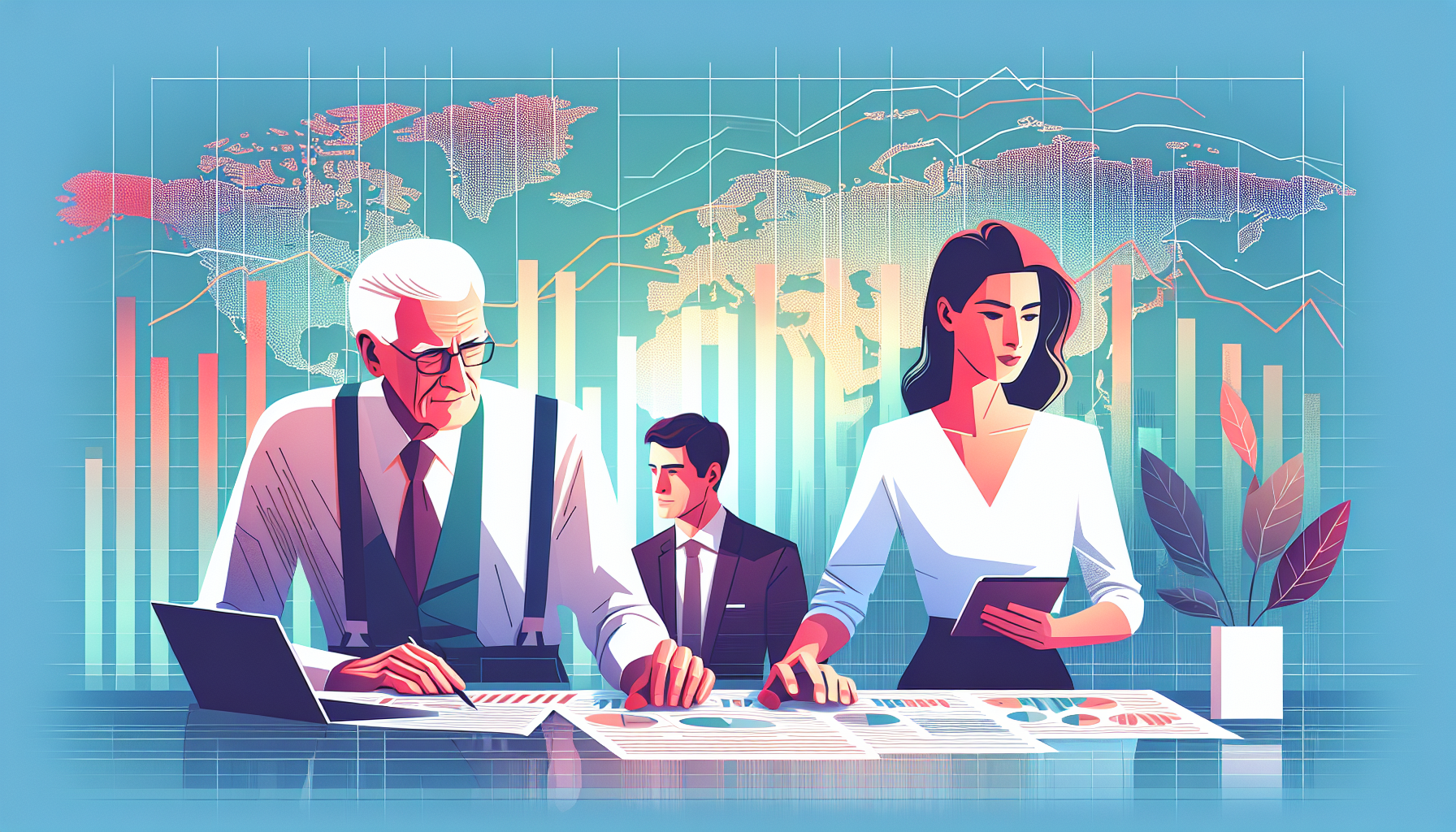
The U.S. economy stands at a crossroads, as the demographic landscape shifts dramatically due to an aging population. Baby boomers—those born between 1946 and 1964—are increasingly pivotal in both the labor market and consumer spending. They are simultaneously a key driver of economic activity and a looming concern for the future trajectory of growth. This article explores how this generation is keeping the economy afloat today and what challenges lie ahead.
### The Current Economic Landscape
The influence of baby boomers on the U.S. economy today cannot be overstated. According to the Federal Reserve Bank of Richmond, by 2025, an astounding 97% of net private-sector job creation is expected to occur in health care and social assistance. This trend reflects not only the growing demand for health services as the population ages but also the economic reliance on older consumers.
In January 2026, the Bureau of Labor Statistics reported that of the 130,000 jobs added in that month alone, 82,000 were in health care. The implications are profound: as the economy grapples with post-pandemic recovery, boomers are stepping in to fill crucial roles, especially in sectors that cater to their generation.
### The Spending Power of Boomers
Boomers are not just significant contributors to the labor force; they are also the wealthiest generation in history. According to Fed data, individuals aged 55 and older control an astonishing 73% of the nation’s wealth, with those aged 70 and above owning 31%. This financial power translates into consumer spending that drives the economy.
What does this mean for economic health? As noted by economists, if boomers were to reduce their spending, the economy could quickly slide into a recession. Moody’s chief economist Mark Zandi expressed this sentiment emphatically: “If wealthy consumers—indeed, older, wealthy consumers—were to pull back, demand would collapse, and we would be heading toward a recession.” In January, he highlighted that 59% of all consumer spending now comes from the top 20% of earners, with those over 50 contributing significantly to this figure.
#### The K-Shaped Recovery
The post-pandemic economic recovery has not been uniform; rather, it has taken on a K-shaped form. This term describes how the wealthiest Americans have thrived while those on the lower end of the income spectrum continue to struggle. The disparities are stark and troubling. Zandi points out that the economy’s reliance on a small group of affluent spenders is a recipe for vulnerability.
The implications are profound. If the economic health of older Americans declines—whether due to market corrections, inflation, or shifts in spending habits—the entire economy could feel the shockwaves.
### The Role of Boomers in Financial Markets
Baby boomers are not just consumers; they are also significant players in the markets. They own the majority of corporate equities and mutual funds, amounting to approximately $30 trillion as of Q3 2025. As Zandi notes, boomers are heavily invested in the stocks of companies driving the AI investment boom, thus acting as a substantial source of capital for innovation.
However, this wealth concentration poses risks. The decline in personal savings rates—dropping from a pandemic peak of 31.8% to just 3.6% in December 2025—suggests that many boomers are spending their assets during retirement. For continued economic momentum, asset prices must remain robust. As Macquarie’s head of North America economics, David Doyle, puts it, the economy is now more vulnerable to asset price corrections than it was two decades ago.
### Inflation and Its Impact on Boomers
Inflation presents yet another challenge for older Americans. Unlike their salaried counterparts, many boomers do not see their asset returns aligned with inflation, making them particularly susceptible to declines in disposable income. Doyle warns that if inflation persists, it could significantly erode the financial security of this demographic, leading to reduced spending and, consequently, economic contraction.
### The Labor Market Dilemma
The aging U.S. population is also reshaping the job market. With an increasing number of individuals reaching retirement age—over 30 million Americans will turn 65 between now and 2030—the demand for health care services will only intensify. This surge creates a paradox: while older Americans are driving job creation in health care, they are simultaneously reducing the size of the labor pool.
The health care industry is currently scrambling to meet this demand, with many economists emphasizing the urgent need for workforce training and development. Yet, as immigration rates decline, the industry’s reliance on foreign-born labor becomes increasingly problematic. A study from the Baker Institute found that the share of foreign-born health care workers rose from 14.22% to 16.52% between 2007 and 2021, even as the overall foreign-born population in the U.S. grew by a mere 1 percentage point.
### A Future of Economic Growth at Risk
The interplay between demand and supply illustrates a critical challenge for future economic growth. Zandi points out that while the aging population currently supports demand—especially in health care—the supply side poses a significant headwind. As the workforce shrinks, productivity growth may also stagnate.
He emphasizes that the reduction in the workforce will not happen overnight; rather, it will manifest as a gradual “corrosion” of growth. This slow decline could be influenced by factors such as shifts in immigration policy and advancements in AI that may mitigate some of the negative impacts. However, the path forward is fraught with uncertainty.
### Opportunities Amid Challenges
Despite these challenges, some experts are optimistic. Doyle suggests that while many fear a sudden shock to employment, it is more likely that job growth will shift into other areas as the economy adjusts. He emphasizes that while the immediate threats are apparent, the long-term opportunities for job creation in emerging sectors may not be as visible.
As the economy evolves, industries will adapt, and new roles will emerge to meet changing demands. However, this transition requires careful planning and investment in skills training to prepare the workforce for the jobs of tomorrow.
### Conclusion: A Balancing Act
The relationship between the aging population and the U.S. economy is undeniably complex. Baby boomers currently serve as a bedrock for economic stability, yet their financial security is precarious. As they age and their spending patterns shift, the economic landscape will inevitably transform.
The challenges posed by an aging workforce, rising inflation, and a shrinking labor pool call for proactive measures. Policymakers must consider strategies to bolster labor supply through immigration reform, educational initiatives, and support for industries poised for growth.
In summary, while the baby boomer generation plays a crucial role in the present economic landscape, the long-term implications of their aging cannot be ignored. The future may hold both challenges and opportunities, but navigating this dynamic will require a thoughtful, balanced approach that prioritizes resilience and adaptability in the face of inevitable change.
Source: https://fortune.com/2026/03/01/boomer-consumption-investing-labor-jobs-creation-recession/


Leave a Reply