
### Introduction
Amidst escalating tensions in the Middle East, particularly concerning Iran, the global oil market has witnessed a significant surge in prices, crossing the $100 per barrel mark for the first time in four years. This spike raises pressing questions about how the world’s largest oil consumers—China, the United States, and India—will navigate this challenging landscape. While all three nations grapple with energy dependence, China appears to have positioned itself more favorably to withstand the shocks of rising oil prices.
This article will delve into the key factors that equip China to better manage surging oil prices, including its substantial crude reserves, diversification of energy sources, and strategic initiatives aimed at reducing fossil fuel dependency.
### China’s Strategic Crude Reserves
China has made significant strides in accumulating one of the world’s largest strategic and commercial crude reserves. As of January 2023, estimates suggest that China holds approximately 1.2 billion barrels of onshore crude stockpiles. This stockpile is equivalent to around three to four months of reserves, which can act as a buffer against immediate economic repercussions from fluctuating oil prices.
According to Rush Doshi, director of the China Strategy Initiative at the Council on Foreign Relations, this strategic reserve allows China to delay the economic impact of rising oil prices. This capability is particularly relevant as tensions in the Middle East threaten to disrupt oil shipments. In recent analyses, OCBC analysts noted that China’s preparedness makes it “less sensitive to a prolonged closure of the Strait of Hormuz than many of its Asian peers.”
### The Importance of the Strait of Hormuz
The Strait of Hormuz is a crucial maritime chokepoint through which approximately 31% of the world’s seaborne oil flows, translating to around 13 million barrels per day. The strait connects the Persian Gulf to the Arabian Sea, with Iran to the north and Oman and the United Arab Emirates to the south. While this passage is vital for global oil transportation, China’s reliance on it has decreased over the years.
Currently, oil shipments through the Strait of Hormuz account for only about 6.6% of China’s overall energy consumption, as per Nomura’s chief China economist Ting Lu. Natural gas imports through the strait add another 0.6%. This transition reflects China’s strategic maneuvering over the past two decades, with a focus on diversifying its energy sources through overland pipelines and an increased share of renewables.
### A Comparative Analysis of Oil Dependence
When examining the energy strategies of the three largest oil consumers, diverging approaches become evident. While the U.S. has ramped up domestic oil production over the past decade, China has proactively diversified its energy portfolio. As of 2023, fossil fuels, including oil and natural gas, account for only 4% of China’s power mix, a stark contrast to the 40% to 50% share observed in many Asian economies.
In terms of oil imports, China stands as the largest crude importer globally, purchasing nearly twice as much as the U.S. and significantly more than India. According to data from the Organization of the Petroleum Exporting Countries (OPEC), India’s petroleum imports constitute about one-fourth of its total energy consumption, making it the most dependent on foreign oil among the three countries. In contrast, China’s dependence on oil imports stands at approximately 14%, allowing for greater resilience in the face of price volatility.
### Renewables: A Growing Share of Energy Consumption
China’s commitment to renewable energy is perhaps one of the most significant factors in its ability to withstand surging oil prices. In 2023, renewables accounted for approximately 1.2% of China’s total energy consumption, a notable increase from just 0.2% two decades earlier. This upward trend is not just a reflection of domestic policy; it has global implications as well.
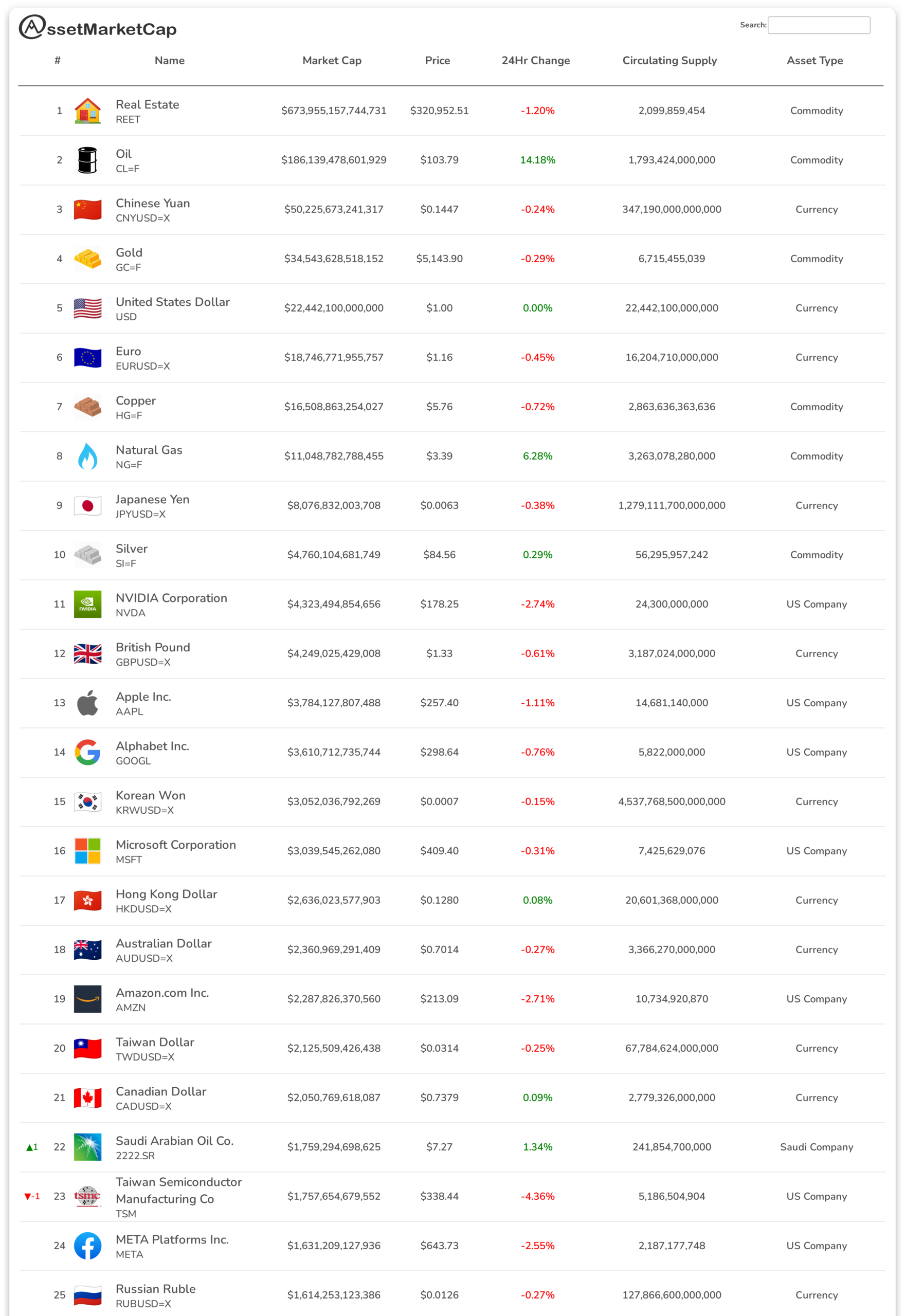
The push towards electric vehicles (EVs) is a key aspect of China’s renewable strategy. Research from the Rhodium Group indicates that China’s transition to electric vehicles, particularly in the trucking sector, has already displaced over 1 million barrels per day of implied oil demand. This figure is expected to grow, with projections suggesting an additional 600,000 barrels per day displacement over the next year. As a result, more than half of China’s new passenger vehicles sold are now classified as new-energy vehicles, which rely more on batteries than traditional gasoline.
### The Future of China’s Energy Landscape
China has set ambitious targets for its energy future. By 2030, the nation aims to increase the share of non-fossil fuels in total energy consumption to 25%, up from 21.7% in 2025. As OCBC analysts highlight, the growing electrification of transportation and the expansion of renewable power generation will further insulate China’s economy from oil-related shocks.
Despite the progress in renewables, coal continues to play a significant role in China’s energy landscape. In 2023, China was still the world’s largest producer and consumer of coal, although efforts are being made to reduce carbon emissions. This dual approach reflects the complexities of transitioning to a cleaner energy system while meeting the immediate demands of a growing economy.
### Geopolitical Risks and Market Dynamics
The U.S. sanctions on Iran have positioned China as one of the few buyers of Tehran’s oil, with Iran accounting for approximately 20% of China’s oil imports. However, this situation could evolve, as increased oil imports from Russia may offset this dependency. The geopolitical landscape remains uncertain, particularly as tensions in the Middle East continue to escalate.
Kuhanathan, Head of Corporate Research at Allianz Trade, emphasizes that the larger risk lies in the approximately 5 million barrels per day of oil that China imports from other Middle Eastern countries through the Strait of Hormuz. As the conflict in Iran persists, the ramifications on global oil supplies could be profound.
### The Path Forward: Transition vs. Dependence
Given the current dynamics, China’s energy transition is not merely a reactive measure but rather a strategic imperative. Analysts like Muyi Yang, senior energy analyst for Asia at Ember, argue that such shocks highlight the risks of heavy reliance on imported oil and gas. The transition towards renewable energy is not solely about expanding wind and solar capacity; it also necessitates a comprehensive strategy for economy-wide decarbonization.
However, achieving these goals is fraught with challenges. The fossil fuel industry in China is largely dominated by state-owned enterprises, which tend to be less dynamic than their private-sector counterparts. As China continues to build its crude reserves, the U.S. Energy Information Administration predicts that the country will expand these strategic stockpiles by around 1 million barrels a day in 2026.
### Conclusion: A Unique Position in Global Energy Markets
China’s ability to navigate the complexities of the global oil market amidst rising prices is a testament to its strategic foresight and ongoing energy transition. As the world watches, China is not just responding to current challenges but is also laying the groundwork for a more resilient energy future. The shift towards renewables, alongside substantial crude reserves, positions China uniquely within global energy markets.
In summary, while surging oil prices pose challenges for all oil-consuming nations, China’s gradual transition towards diversification and renewables may provide a buffer against the economic shocks that could impact its counterparts. As geopolitical tensions continue to influence the energy landscape, China’s approach may serve as a model for other nations seeking to enhance their energy security in an increasingly volatile world.
Source: https://www.cnbc.com/2026/03/09/china-oil-shock-iran-war-hormuz-energy-transition.html


Leave a Reply